- 01844 260231
- lwsnursery@lordwilliams.oxon.sch.uk
- Mon - Fri: 8:00 - 17:00
- Visit our Instagram page

Areas of Learning

We have monthly topics where they learn about the world, celebrate different religious and cultural events, seasons and participate in a variety of themed activities.
We have an interactive smart table which is used to teach the children how to use touch screens and navigate through engaging activities and games.
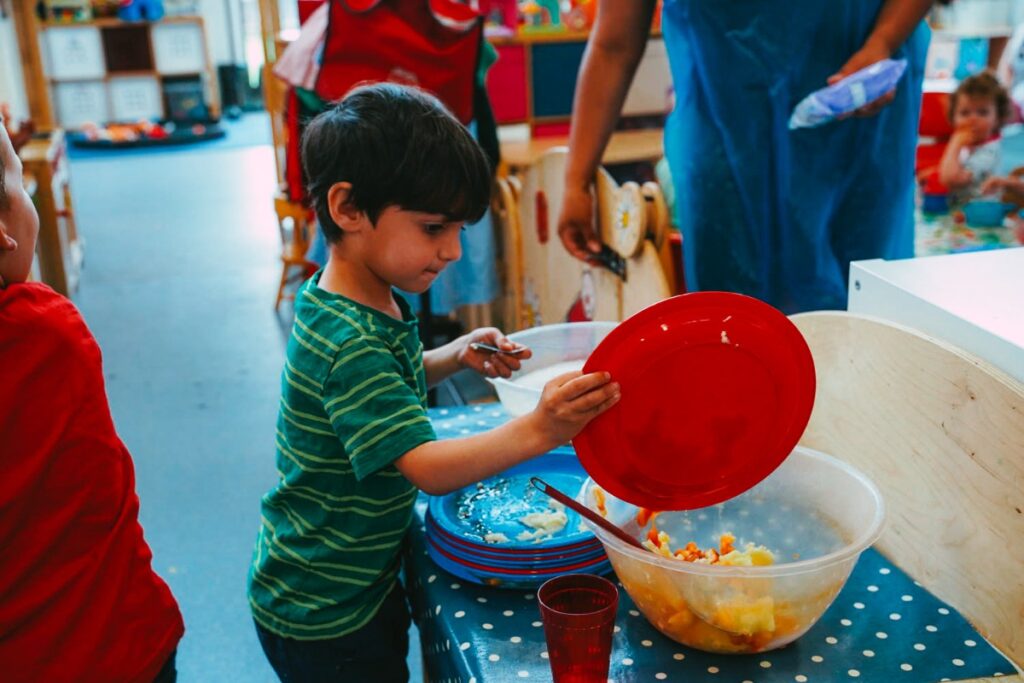
Circle time, developing manners, being kind and personal care are part of the daily life in the Nursery for all the children.
As well as this we encourage the children to look after the garden, grow fruit, vegetables, herbs and flowers – you may even have some of these ‘home-grown’ items brought home to you!The children also participate in the highly regarded Rugby Tots scheme run by Coach Rob and in Dance sessions run by xxx. These are run throughout the year.
Key Person
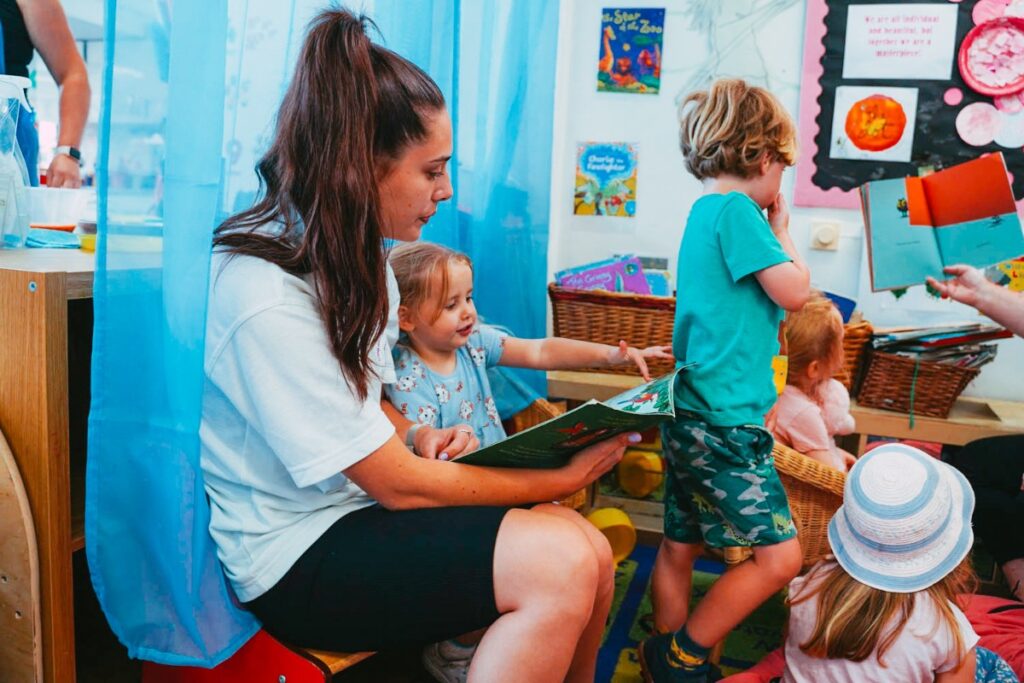
Your child will be assigned a key person and you will be told who this key person is and have their role explained to you. They will help your child to settle and will then be responsible for ensuring that the care your little one receives meets all of their needs.
The key person will be your first point of contact with the nursery or pre-school, and is also responsible for exchanging information with you. You will get verbal updates most days, and regular written summaries about how well your child is progressing in their learning and development.
Watching and learning
It will be the key person who observes your child regularly as they are playing and learning, they will pay attention to how your child learns, what they enjoy playing with and what they need more support with. They will also keep a record of the observations they have made, this will be in a Learning Journey that documents your child’s progress through the Early Years Foundation Stage. This is available to you for review at any time.
The key person will use their observations to plan further learning opportunities that are based on your child’s individual interests and needs. This is because they know that children learn best when the experiences they have are challenging and enjoyable, allowing them to play and explore, to concentrate and to develop their own ideas.
Talking — a two-way street
A key person’s responsibilities stretch beyond meeting the basic needs of your child and exchanging information with you. From the moment that you are introduced the key person will make you feel that their setting is a safe place that you can trust, they are your insight into your child’s world whilst they are away from you, whilst establishing the professional boundaries and expectations upon which your on-going relationship is based.
Your feedback is valued and will be listened to as part of the partnership between you, your child and the key person.
Early Years Foundation Stage
The Early Years Foundation Stage (EYFS) curriculum sets standards for the learning, development, and care of children from birth to 5-years-old. It’s the first stage of a child’s education. It ends when a child enters Key Stage One (KS1).
The EYFS framework follows 7 areas of learning. Your child will mostly be taught through games and play.
The areas of learning are:
- communication and language
- physical development
- personal, social and emotional development
- literacy
- mathematics
- understanding the world
- expressive arts and design
The 4 main EYFS principles are:
A Unique Child
Every child is unique and each one responds to different learning methods in different ways. Importantly, every child is capable of being strong, resilient and capable learner with the right guidance. We ensure that each child has an individual plan in order for them to get the best experience from their time with us. We have stringent health and safety and risk assessment procedures that all staff know and follow. These policies are available for you to review in the parents’ folder at the nursery – please ask the Nursery Manager if you would like to see it.
Enabling Environments
The environment in which a child learns should prompt and encourage good learning techniques. We have an enabling environment and it is one which caters to each individual child’s needs and gives them the freedom to expand their knowledge and development. The learning structure is followed inside the nursery and outside in the garden.
Positive Relationships
Children should be encouraged to be strong and independent when required, forming the basis for positive relationships that they will go on to have. They should also be given the safety and security to bolster the relationships they have with those closest to them. We also have a fantastic relationship with all our parents and you become part of our community when you join our nursery.
Learning and Development
By following the EYFS Seven Areas of Learning, both Prime and Specific, each child will be taught a wide range of skills to aid their physical and mental development. These are recorded in their learning journal. We are very proud to have a dedicated EYFS teacher that is dedicated to ensuring the latest developments are communicated to all the nursery practitioners and trains the staff regularly on the Early Learning Goals framework.
Assesments
Your child will be observed when they first arrive at the nursery and then daily observations are recorded in the Learning Journey. Your key person is always available to discuss your child’s learning journey.
Your child’s progress will be reviewed when they’re between 2 and 3 by your key person. The assessment is based on in-room observation – your child won’t be tested. It uses the early learning goals, which can be found in the early years framework.
Transition to School
When it is time for you to apply for your child’s entry in to Reception we have strong links to the local Thame primary schools and we keep you up to date with milestones and learning records should these be needed for entry.
Your key person will identify the areas of learning and play which will ensure that your child is ready for the transition to school.


